Summary
Speaking with established ABA franchise owners gives you actionable information on costs to open, securing financing, site selection, hiring employees, franchisor training and support, marketing and recruiting clients, profitability, and day-to-day operations. We recommend prospective franchisees talk to franchise owners to learn their experience levels.
Purchasing an ABA franchise is a significant financial and career choice.
A sales presentation and website designed specifically for the franchise can detail the model, investment level, training, and support available to prospective franchise owners. However, there is another rich source of information: people already working in the business.
Current ABA franchise owners can provide a window into what ownership really looks like.
Find out what happened and discover which problems were more difficult than anticipated.
These conversations should complement your formal due diligence, not substitute for it. Information such as the Franchise Disclosure Document (FDD), finances, professional counsel, and your own research of the details will always represent an essential component of a prudent franchise selection process.
This is not about finding an owner.
We are hoping to learn from the experience of having been through it already.
Why Should You Talk to Existing ABA Franchise Owners?
Learn What the Franchise Experience Is Really Like
A franchise owner’s experience can reveal what happens at each stage of the process:
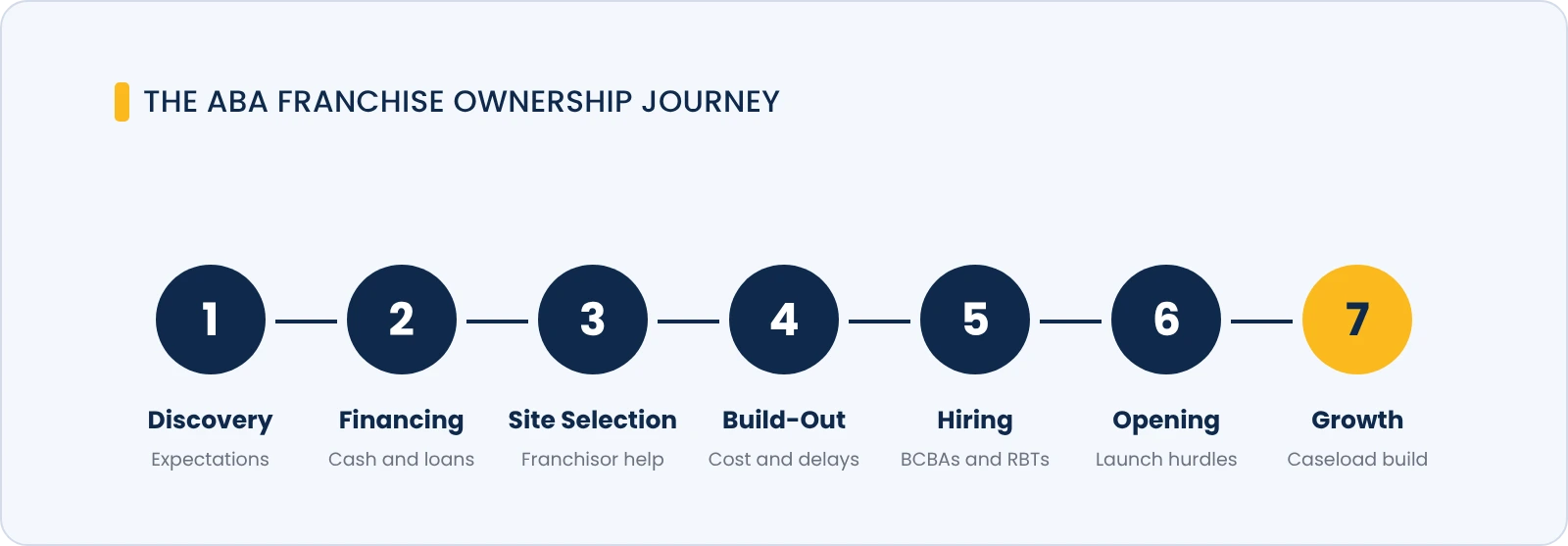
Ask owners to walk you through their experience from beginning to present day.
- What took longer than expected?
- Which parts went smoothly?
- Where did they need the most help?
- Did the support they expected match the support they received?
These answers can help turn a theoretical franchise model into a more realistic picture of ownership.
Compare Expectations With Reality
Your conversations with franchise owners can also help you compare what you heard during the franchise evaluation process with what owners actually experienced.
For example, if you were told that site selection would be heavily supported, ask an existing owner what that support looked like in practice.
If staffing was presented as a major focus, ask how much help they actually received with recruiting and retaining employees.
You are looking for patterns, not isolated comments.
Questions to Ask Existing ABA Franchise Owners
Questions About the Initial Investment
Start by understanding the financial reality of opening the clinic.
Questions to Ask
- What did you actually spend to open your ABA clinic?
- Did your total startup costs match the initial estimates?
- Which expenses came in higher than expected?
- How much working capital did you need?
- Did construction or build-out costs change?
- Were there unexpected pre-opening expenses?
- Did you use financing?
- If so, how did you choose your lender?
- Did the franchisor help you prepare for financing?
- How long did it take you to hire a BCBA?
- How much demand was there for ABA services in your local market?
Why These Questions Matter
There can be a meaningful difference between an estimated investment and the actual cash required to open and operate a new clinic.
Costs can vary based on location, facility, construction requirements, staffing, local expenses, and other factors.
Instead of asking only, “How much did you invest?” ask the owner to explain where the money went.
That can help you understand which expenses were predictable, which changed, and how much financial cushion was needed during the startup period.
Questions About Financing the Franchise
Financing is another area where an existing franchise owner can provide useful perspective.
Questions to Ask
- How did you finance your franchise?
- How much personal capital did you contribute?
- Did you use an SBA-backed loan?
- Did SOS connect you with a lender?
- How useful were SOS’s financing resources?
- Did the business plan or pro forma help during the loan process?
- Did you experience any financing challenges?
- How did you plan for working capital?
- Would you structure your financing differently if you started again?
Do not focus exclusively on how much an owner borrowed.
Ask about the process of financing the business and what they learned about managing cash during the startup period.
For example, an owner may explain that maintaining adequate working capital was more important than initially expected, or that certain expenses required more planning.
Those insights can be much more useful than a simple statement about the size of their loan.
Questions About Opening the ABA Clinic
Once financing is addressed, find out what it actually took to get the doors open.
Ask:
- How long did it take to open your clinic?
- What was the most difficult part of the launch?
- How helpful was SOS during site selection?
- Did the build-out stay on schedule?
- How involved were you in the construction process?
- What licensing and credentialing requirements did you need to navigate?
- How much support did you receive before opening?
- What would you do differently during the pre-opening phase?
Ask owners to identify the point when the process became most challenging.
- Was it finding the right property?
- Completing the build-out? Recruiting staff?
- Preparing for clients?
- Managing multiple vendors?
Their answers can help you understand where you may need to dedicate additional time and attention.
Questions About SOS Franchise Support
This should be one of the most important areas of your conversation.
A franchise system can offer extensive resources on paper, but the experience of using those resources matters.
Training
Ask:
- Was the initial training useful?
- Did it prepare you for running the business?
- Which areas required additional learning?
- How accessible was the SOS team after training ended?
- What did you wish training had covered in greater detail?
Operational Support
Ask:
- When was the last time the SOS support team communicated with you?
- Suppose you run into an operational issue?
- How quickly does SOS respond?
- What specific type of support has been most valuable?
- As your clinic matured, did the level of support change?
You need to know not only if support exists, but how it works when you really want something.
Clinical Support
Hiring an ABA franchise has different operational and clinical considerations.
Ask:
- How does SOS help in clinical operations?
- When dealing with clinical difficulty, what will decide what happens next?
- How does the franchise system assist in retaining quality?
- To what degree do owners work with clinical leadership?
- What clinical responsibilities remain with the owner versus the clinical team?
These questions can help clarify the relationship between the business side of ownership and the clinical professionals operating within the clinic.
Marketing Support
Ask:
- What marketing resources did you use in reality?
- Has the franchisor promoted awareness in your local market?
- What marketing channels were most effective for your clinic?
- What portion of the local marketing were you handling?
- Does it detail your experience educating, building relationships, and working with these sources?
Marketing support is great, but local execution matters. A current owner can highlight what performed well in their market and what required extra focus.
Questions About Staffing and Recruiting
Staffing is one of the most important operational considerations when planning how to start an ABA clinic, as having qualified professionals in place is essential for delivering consistent, high-quality care and managing daily operations.
Ask:
- How difficult was it to recruit qualified staff?
- How long did hiring take before opening?
- Which positions were hardest to fill?
- Does SOS help with recruiting?
- How much employee turnover have you experienced?
- How do you retain BCBAs and RBTs?
- How much time do you spend managing employees?
- What happens when a key employee leaves?
- What staffing challenge surprised you most?
Do not stop at “Is hiring difficult?”
Ask the more revealing question:
“How much of your time goes into recruiting, training, scheduling, and retaining your clinical team?”
That answer can give you a much clearer picture of the management responsibilities involved in running an ABA clinic.
Questions About Client Acquisition and Growth
A clinic needs clients to build its caseload and support ongoing operations.
Ask:
- How did you get your first clients?
- How long did it take to build your caseload?
- Which referral sources have been most valuable?
- Does the franchisor help with local business development?
- How important are relationships with schools and healthcare providers?
- How do you build relationships with families?
- What has been your biggest growth challenge?
- What helped your clinic reach its current size?
Pay attention to whether the owner describes growth as primarily driven by franchisor support, local relationships, staffing capacity, market demand, or a combination of factors.
That can help you understand what you may need to contribute personally.
Questions About Revenue, Expenses, and Profitability
Financial conversations require care.
Instead of asking only, “How much money do you make?”, ask broader questions about the financial performance of the business.
Questions to Ask
- How long did it take your clinic to reach its operating goals?
- What were your biggest recurring expenses?
- Which costs surprised you?
- How did staffing costs affect the business?
- What factors had the biggest impact on profitability?
- How important was maintaining an adequate caseload?
- Did your actual financial performance match your expectations?
Remember that every franchisee operates under different circumstances.
Differences can include:
- Territory
- Local demand
- Payer mix
- Staffing availability
- Caseload
- Operating costs
- Competition
- Owner experience
- Market conditions
Therefore, one franchisee’s financial results should not be treated as a prediction of your own results.
When evaluating financial performance, prospective franchisees should review the applicable financial-performance information in the FDD rather than relying solely on informal conversations with franchise owners.
Also Read: Best ABA Therapy Franchise Comparison for Investors
Questions About the Day-to-Day Owner Experience
When deciding whether to buy a business, financial performance is only one aspect.
You also need to understand what your life might look like after you start.
Ask:
- What does a normal day look like?
- How many hours do you actually work?
- Do you sit at the clinic all day?
- Which work items eat away your time?
- How much time is spent on employees versus business development?
- Can you take vacations without the clinic depending entirely on you?
- What is your favorite part of ownership?
- What part do you enjoy least?
One especially valuable question is:
“If you could go back to the day before you signed your franchise agreement, what would you want to know?”
Give the owner time to answer. Do not immediately move to your next question.
Sometimes the most useful information comes from an answer you did not expect.
Questions About the Franchise Relationship
Your relationship with the franchisor can continue for years, so ask about more than the opening process.
Consider asking:
- Do you feel SOS listens to franchisee feedback?
- How transparent is communication?
- How are major changes communicated?
- Do franchisees have opportunities to share feedback?
- Have you ever disagreed with a franchisor decision?
- If so, how was the disagreement handled?
- Do you feel the franchisor’s interests and franchisees’ interests are aligned?
- Would you choose the same franchise again?
The purpose is not to find a franchise system with which every owner agrees on every issue.
No business relationship works that way.
Instead, look at how disagreements are handled and whether franchisees feel they have a meaningful channel for communication.
Questions About Challenges and Mistakes
Do not make your conversations entirely positive.
Some of the most useful information may come from mistakes, setbacks, and unexpected challenges.
Ask:
- What was your biggest mistake?
- What was harder than you expected?
- What took longer than expected?
- What cost more than expected?
- What operational problem took the longest to solve?
- What staffing problems have you faced?
- What would you do differently if opening again?
- What advice would you give someone preparing to open their first ABA clinic?
Pay attention to what an owner says when they describe a bad experience.
Even if those factors constitute a challenge, it’s far from conclusive proof that the franchise wasn’t a good investment. No new business comes without its difficulties.
You want to focus on what happened, how it was resolved, and if the experience will likely be relevant to you.
Ask Different Franchisees Different Questions
Do not base your entire evaluation on one conversation.
Different franchisees can give you different perspectives.
Newer Franchisees
Ask newer owners about:
- Startup
- Financing
- Training
- Site selection
- Hiring
- Build-out
- Opening
They can give you a relatively recent view of the launch process.
Established Franchisees
Ask established owners about:
- Long-term support
- Staffing
- Growth
- Management
- Profitability
- Ongoing franchisor relationships
They can help you understand what happens after the excitement of opening has passed.
High-Performing Franchisees
Ask:
- What systems have contributed to growth?
- How did you build your team?
- What decisions had the greatest impact on your clinic?
- What would you recommend to a new owner?
Remember that successful owners may have unique circumstances, so do not assume their exact results can be replicated.
Franchisees in Markets Similar to Yours
Try to speak with owners operating in markets that resemble the one you are considering.
Compare factors such as:
- Population
- Competition
- Labor market
- Payer environment
- Facility costs
- Referral networks
- Local demand
A franchisee operating in a very different market may provide useful insight, but a comparable market can make that insight more relevant to your own planning.
Don’t Skip the Franchise Disclosure Document
Conversations with franchise owners are valuable, but they are only one part of the due-diligence process.
The Franchise Disclosure Document (FDD) should remain a central document in your evaluation.
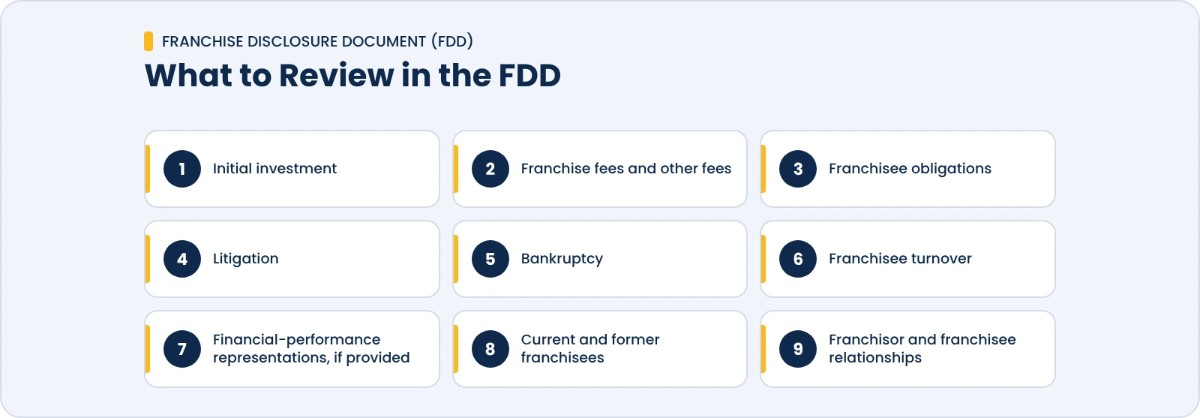
Use conversations with franchisees to help you understand the practical experience behind the information in the FDD.
If an owner tells you something that appears substantially different from what you read in the franchise documents, do not simply choose one version.
Investigate the difference.
Ask the franchisor for clarification and discuss the issue with an experienced franchise attorney or qualified financial advisor.
SOS provides information about its franchise opportunity and support system, but prospective franchisees should conduct their own independent due diligence before making an investment decision.
Conclusion: Let Franchisee Experience Inform Your Decision
Speaking with existing ABA franchise owners can reveal details that are not always obvious from a website, brochure, or franchise presentation.
Ask about money, financing, startup, staffing, support, operations, growth, challenges, and the day-to-day owner experience.
Then speak with more than one owner.
Talk to newer franchisees. Talk to established franchisees. Talk to owners in markets that resemble yours. If possible, speak with franchisees whose business circumstances are meaningfully different so you can identify which challenges are common and which may be unique.
Most importantly, look for patterns.
And remember that these conversations do not replace the FDD or professional due diligence. Use them together.
The right ABA franchise investment should make sense financially, operationally, and personally.
If you are considering SOS, talking with existing franchise owners can help you better understand what it means to build and operate an ABA clinic within the SOS system.
Learn more about the investment, franchise model, support system, and next steps for opening your own ABA clinic with SOS franchising.
FAQs
- What should I look for when a franchise owner gives a very different answer from other franchisees?
Do not automatically dismiss either answer. Ask additional franchisees about the same issue, compare the circumstances, and review the FDD. Differences may result from location, timing, business size, or individual experience.
- How can I tell whether a franchisee’s success is repeatable?
Look for patterns across multiple owners and markets. Consider whether similar results are supported by the applicable financial-performance information in the FDD rather than assuming one owner’s experience will apply to you.
- Should I speak with former ABA franchise owners before investing?
Yes. Former franchisees can provide another perspective on why they left the system. Compare their experiences with those of current owners and investigate any recurring concerns.
- What questions should I ask franchise owners about the franchise agreement?
Ask how the agreement affects daily operations, fees, renewal, obligations, restrictions, and the franchise relationship. For legal interpretation, consult a qualified franchise attorney.
- How should I organize feedback from multiple franchise owners?
Create a simple comparison covering investment, financing, opening, staffing, support, marketing, operations, growth, challenges, and owner workload. Look for recurring themes rather than relying on a single positive or negative experience.
The SOS Franchise Editorial Team shares insights and guidance for aspiring and current ABA clinic owners on franchising, operations, and growth with SOS Franchising.