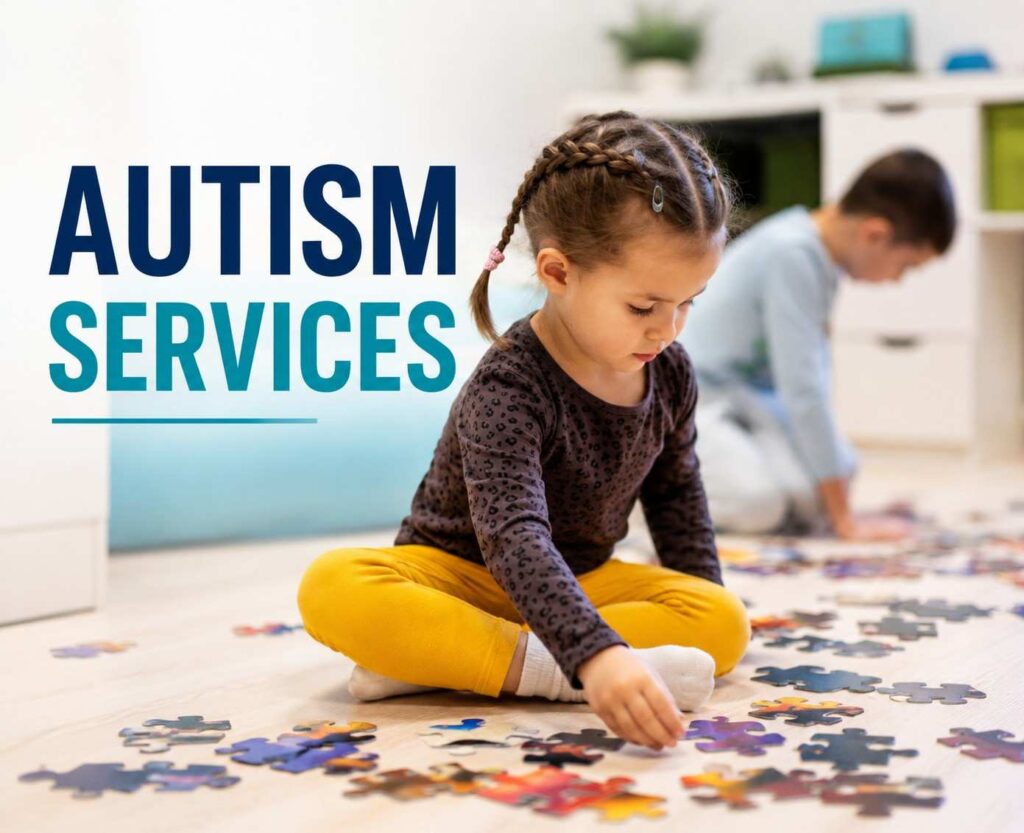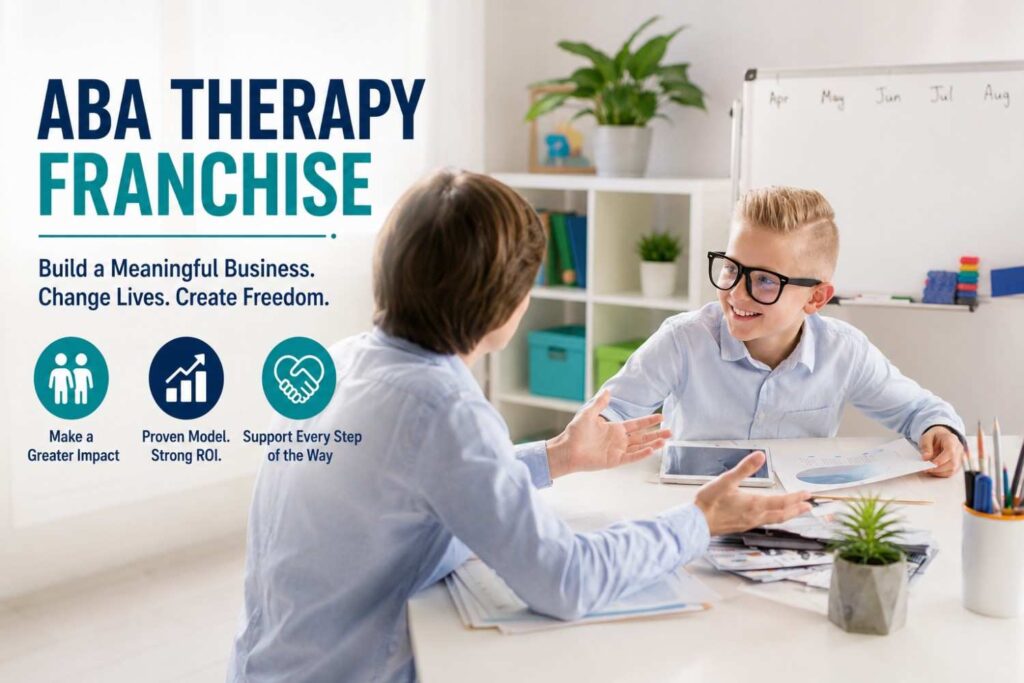



Summary: The demand for autism services continues to rise across the United States, creating a powerful opportunity for entrepreneurs looking to enter healthcare without being clinicians themselves. ABA (Applied Behavior Analysis) therapy remains the gold standard for treating autism, and franchising has emerged as one of the fastest ways to scale high-quality care while maintaining operational consistency.
For investors evaluating this space in 2026, understanding the differences between leading ABA franchise models is critical. Below is a detailed, objective comparison of some of the most recognized ABA franchise opportunities available today.
Founded in 2015 in Houston, Texas by Nichole Daher, an autism mom, Success On The Spectrum is widely known for pioneering the ABA franchise model. The company began franchising in 2018 and positions itself as the first autism treatment franchise in the United States.
SOS operates a hybrid service model, offering both clinic-based and in-home therapy. It serves children from 18 months up to 18 years old, making it one of the more flexible providers in terms of age range and service delivery.
In terms of scale, SOS is significantly ahead of most competitors. A franchise directory reports approximately 88 open locations across 20 states and 125 territories sold. This level of expansion suggests high brand awareness, a mature infrastructure and proven replication model.
What distinguishes SOS is its emphasis on transparency and clinical environment design. Many locations include parent viewing areas, allowing families to observe therapy sessions in real time. The company also focuses heavily on structured, in-center environments that support skill generalization across multiple settings.
Beyond the Label was founded in 2013 by BCBA Amiee Taylor. Unlike some competitors, its model is centered entirely around in-home ABA services.
This approach offers lower overhead for franchisees since it eliminates the need for a physical clinic. However, it also limits control over the therapy environment, which can impact consistency and scalability.
The company serves children up to 18 years old and has a smaller footprint, with locations across 4 states. While the brand predates some newer entrants, its growth appears more modest compared to larger franchise systems.
For investors, this model may appeal to those seeking a lower initial investment, but it may also come with trade-offs in terms of brand differentiation and operational control.
Able Autism Therapy is a newer entrant to the market, founded in 2021 by Idris Demirci. The company only began franchising in November 2024, making it one of the youngest franchise systems in this space.
Able ABA offers both clinic-based and in-home services and serves children up to 18 years old. Currently, it operates 7 locations across 4 states.
Because of its early stage, investors should view this opportunity as higher risk but potentially higher upside. The model has not yet been tested at scale, and long-term operational consistency remains to be proven.
Essential Speech & ABA Therapy was founded in 2017 by Amber Lister, Nafisa Obi, and Camila Trevino. It began franchising in 2023 and offers an integrated therapy model that combines speech therapy and ABA services under one roof.
This multidisciplinary approach can be attractive to families seeking comprehensive care in a single location. However, this company focuses on a narrower age group, serving children only up to age six.
The brand currently operates 16 locations across 5 states. Its clinic-only model allows for strong environmental control but may require higher upfront investment due to facility costs.
Autism Care Therapy was founded in 2021 by BCBA Shaden Kassar and began franchising the same year.
ACT serves individuals up to 20 years old. The company operates clinic-based services only and has grown to 18 locations across 4 states.
Its early adoption of franchising has allowed for moderate growth, but like other newer brands, it is still in the process of establishing long-term scalability and brand recognition.
| Franchise | Initial Franchise Fee | Royalty Fee |
|---|---|---|
| Success On The Spectrum (SOS) | $45,000 | 5% of gross sales, capped at $5,000/month |
| Beyond the Label | $37,500 | 8% of gross revenues |
| Able Autism Therapy | $40,000 | 5% of gross sales |
| Essential Speech & ABA Therapy | $49,500 | 5% of gross revenue |
| Autism Care Therapy (ACT) | $65,000 | 7% of gross revenue |
*publicly reported franchise fees and royalties; investors should confirm all numbers in the current FDD before making decisions.
When comparing ABA therapy franchises, franchise costs are one of the most important decision points for investors, alongside scalability, service model, clinical control, and brand maturity.
More established systems like Success On The Spectrum offer a proven infrastructure, broader geographic presence, and refined operational systems. These advantages can reduce risk for first-time healthcare entrepreneurs.
Newer or smaller systems may offer lower entry costs or niche positioning, such as in-home-only or integrated therapy models. However, they often lack the long-term data and large-scale operational validation that many investors prioritize.
Ultimately, the “best” ABA franchise depends on your investment goals. If you are seeking a highly structured, scalable system with demonstrated national growth, larger and more established brands may be the strongest option. If you are more comfortable with early-stage opportunities and potential upside, newer entrants may be worth exploring.
As the autism therapy industry continues to expand, franchising is likely to play an increasingly important role in meeting demand. For investors in 2026, careful comparison and due diligence will be essential to selecting the right partner in this rapidly growing healthcare sector.
1. What is the best ABA therapy franchise for investors?
The best ABA therapy franchise depends on factors such as startup costs, franchise support, scalability, brand reputation, and whether the business model aligns with your investment goals.
2. How much does it cost to open an ABA therapy franchise?
The cost of opening an ABA therapy franchise varies based on franchise fees, clinic setup, staffing, licensing, and location. Investors should evaluate both upfront and ongoing operational costs.
3. Can a non-clinician invest in an ABA therapy franchise?
Yes. Many ABA franchise opportunities are designed for entrepreneurs and investors without clinical backgrounds, provided licensed professionals oversee patient care and clinical services.
4. Is an ABA therapy franchise a profitable business opportunity?
ABA therapy franchises can offer strong growth potential due to increasing demand for autism services, but profitability depends on efficient operations, staffing, reimbursement structures, and franchise support.
5. Why are ABA therapy franchises growing rapidly?
Growing autism awareness, earlier diagnoses, and increased demand for evidence-based autism treatment have created strong demand for ABA therapy centers across the United States.

Nichole Daher is an American entrepreneur, book author, autism advocate, and founder of Success On The Spectrum (SOS)-the first autism treatment franchise in the United States-known for its parent viewing rooms and quality-driven ABA services. She currently serves as CEO of SOS Franchising, where she provides support, resources, and opportunities for entrepreneurs to open their own Success On The Spectrum autism centers.