


Summary
The FDD is a crucial due-diligence tool for evaluating a Success On The Spectrum (SOS) ABA franchise. It outlines fees, costs, obligations, support, territory, financial performance, franchisee history, and legal terms. Buyers should also assess ABA-specific factors such as staffing, licensing, reimbursement, clinical oversight, demand, and operational requirements before investing.
Buying a franchise is a big deal.
Before you commit to opening a Success On The Spectrum (SOS) center, you need to actually know what you’re getting into. What you’re buying. What it’ll cost. What they want from you. What they’re going to do for you.
That’s where the FDD comes in.
An FDD is basically a standard way to look at all these details before you commit. The FTC has a rule that says franchisors have to give you one. It’s got 23 specific disclosure items covering fees, obligations, litigation, financial information, franchisee relationships, and more.
For an ABA franchise, that FDD review means you’re also digging into clinical staffing, licensing, insurance reimbursement, what your facility needs to look like, and how they oversee the clinical side.
The FDD isn’t just paperwork to sign off on. It’s your due-diligence tool.
What Is a Franchise Disclosure Document?
An FDD is basically a standardized form that lays out what you need to know about a franchise before you commit.
The FTC has a rule about it. Franchisors have to give it to you at least 14 days before you sign the document. It’s designed to help you actually figure out if this is the right move.
What the FDD Tells You
The FDD covers the big stuff like:
- Who’s running the franchising company and what they’ve done before
- Any lawsuits or bankruptcy they’ve been through
- What you pay upfront and what you pay later
- How much it costs to get started
- What they expect you to do
- What training and help they’ll give you
- Whether you get your own territory
- How hands-on you need to be
- How long you can own it and how to get out
- What they say about money (if they say anything)
- Which franchises opened, closed, or got sold
- Their financial information
- What contracts you’re signing
The FTC recommends reviewing all 23 items and asking questions when something is unclear.
Why the FDD Matters for an ABA Franchise
An ABA franchise involves considerations beyond a typical business franchise, including:
- Clinical staffing and credentials
- Licensing and compliance
- Insurance and reimbursement
- Facility requirements
- Client capacity
- Clinical oversight
- Territory demand
- Ongoing operational support
Understanding these factors can help you evaluate the franchise beyond its initial investment.
FDD vs. Franchise Agreement
FDD: Tells you what you need to know to make a decision.
Franchise Agreement: It is the legal contract that establishes your relationship with SOS, including your rights, responsibilities, fees, restrictions, renewal, and termination terms.
The FDD doesn’t replace the contract. You have to read both. Talking to a lawyer and an accountant before you sign is just smart.
The 23 FDD Items: Quick Reference
|
# |
FDD Item |
What to Evaluate |
| 1 | The Franchisor | Company history, ownership, parents, predecessors, and affiliates |
| 2 | Business Experience | Leadership and management experience |
| 3 | Litigation | Lawsuits, claims, and legal disputes |
| 4 | Bankruptcy | Bankruptcy history |
| 5 | Initial Fees | Initial franchise and other upfront fees |
| 6 | Other Fees | Royalties, marketing, technology, and other recurring fees |
| 7 | Estimated Initial Investment | Total estimated cost to open and operate initially |
| 8 | Restrictions on Sources | Required suppliers and purchasing restrictions |
| 9 | Franchisee Obligations | Your contractual responsibilities |
| 10 | Financing | Financing offered or arranged by the franchisor |
| 11 | Franchisor Assistance | Training, support, technology, advertising, and assistance |
| 12 | Territory | Territory rights, limitations, and protections |
| 13 | Trademarks | Brand and trademark rights |
| 14 | Patents, Copyrights & Proprietary Information | Intellectual property protections and restrictions |
| 15 | Obligation to Participate | Owner involvement and management requirements |
| 16 | Restrictions on What You May Sell | Products, services, and operating restrictions |
| 17 | Renewal, Termination, Transfer & Dispute Resolution | Contract term, exit rights, renewal, transfer, and termination |
| 18 | Public Figures | Public figures used in promoting the franchise |
| 19 | Financial Performance Representations | Revenue, sales, or other financial performance information, if disclosed |
| 20 | Outlets & Franchisee Information | Openings, closures, transfers, terminations, and franchisee contacts |
| 21 | Financial Statements | Franchisor financial condition |
| 22 | Contracts | Agreements you may be required to sign |
| 23 | Receipts | Confirmation that you received the FDD |
The FTC requires these 23 disclosure categories under its Franchise Rule.
The FDD Items ABA Franchise Buyers Should Watch Closely
Not every item carries the same weight for every buyer. For an ABA franchise, several deserve particular attention.
Items 1 & 2 — Who Is Behind the Franchise?
Look at:
- How long the franchisor has operated
- How long it has franchised
- Leadership experience
- ABA and healthcare experience
- Ownership or leadership changes
Ask: Does the franchisor have meaningful experience supporting ABA centers?
Item 3 — Litigation
Review lawsuits, franchisee disputes, and regulatory matters.
One lawsuit does not automatically make a franchise a bad investment. Look for patterns and ask questions about anything that concerns you.
Items 5 & 6 — What Will You Pay?
Review the complete fee structure, including:
- Initial franchise fee
- Royalty
- Marketing fees
- Technology fees
- Training fees
- Renewal and transfer fees
- Other recurring costs
Don’t evaluate the opportunity based only on the initial franchise fee. Look at the total cost of operating an SOS center.
Item 7 — What Does It Really Cost to Open?
Review costs for:
- Real estate
- Build-out
- Equipment and furniture
- Technology
- Licensing and insurance
- Initial staffing
- Marketing
- Professional fees
- Working capital
Separate the cost to open from the cash needed to operate while the center ramps up.
Ask how the franchisor calculated its estimates and which costs can vary by market.
Item 11 — What Support Will You Actually Receive?
For a first-time ABA franchise owner, Item 11 deserves close attention.
Look for support with:
Before Opening
Site selection, center design, licensing, recruiting, and business planning.
During Launch
Training, hiring, marketing, technology, and operational setup.
After Opening
Operations, marketing, training, quality assurance, and ongoing performance support.
Key question: Is the support specific enough to understand what you are actually receiving?
Item 12 — How Does Your Territory Work?
For an ABA center, territory can affect client access, referrals, staffing, and growth.
Evaluate:
- Territory boundaries
- Protected or exclusive rights
- Existing locations
- Future locations
- Reserved franchisor rights
- Alternative service delivery
Ask: What protections apply to my territory, and how could the market change as the SOS network grows?
Also research local demand, competition, referral sources, staffing availability, and potential clients.
Item 15 — How Involved Will You Be?
ABA franchise ownership is not necessarily passive.
Review:
- Owner participation requirements
- Manager requirements
- Clinical leadership
- Training
- Daily operational responsibilities
Business Owner ≠ Clinical Provider
You do not necessarily need to be a BCBA to own an ABA franchise. At SOS, owners focus on leading the business while qualified clinical professionals provide and supervise clinical services.
Understand exactly what will be your responsibility and what will be handled by your clinical team.
Item 17 — What Happens If You Want to Leave?
Review:
- Contract term
- Renewal
- Termination
- Default
- Transfer
- Sale of the business
- Franchisor approval
- Post-termination restrictions
Ask:
Can I realistically sell or transfer the franchise if my circumstances change?
Item 19 — The Financial Performance Representation
Item 19 can be one of the most important sections of the FDD.
If financial performance information is provided, examine:
- Number of locations represented
- Average and median results
- High and low performers
- New vs. mature centers
- Company-owned vs. franchise locations
- Revenue and expense information
- Period covered
Revenue Is Not Profit
A center can generate substantial revenue while also carrying significant payroll, rent, insurance, clinical, administrative, and other operating expenses.
Ask:
How many locations achieved the reported results, and are the results representative of a typical location?
Do not treat financial performance information as a guarantee.
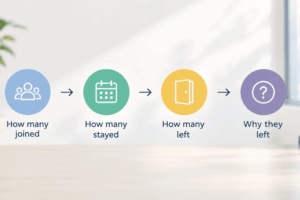
Item 20 — Follow the Franchisees
Item 20 shows franchise openings, closures, transfers, terminations, and other changes.
A growing franchise system is not automatically a healthy one.
Look at:
Speak with a mix of:
- New franchisees
- Long-term franchisees
- High-performing franchisees
- Average-performing franchisees
- Former franchisees
Their experiences can provide context that the FDD alone cannot.
Item 21 — Is the Franchisor Financially Healthy?
Review the franchisor’s financial statements for:
- Revenue
- Assets
- Liabilities
- Cash flow
- Profit and loss
- Auditor notes
The franchisor’s financial health matters because franchise owners depend on it for continued training, technology, marketing, operations, and other support.
What Makes an ABA Franchise FDD Different?
An ABA franchise requires additional due diligence beyond standard franchise considerations.
Staffing
Assess BCBA and RBT coverage, recruitment, training, and clinical leadership as well as turnover.
Licensing & Compliance
State regulations for providers, facilities, professional credentials, and clinical oversight
Insurance & Reimbursement
Ask about credentialing, payer relationships, reimbursement, denied claims, and the role insurance plays in revenue.
Client Acquisition
Examine referrals, marketing, physician and school relations, and community initiatives.
Capacity
Become familiar with client abilities and employee needs, calendaring process, utilization principles, and ramp assumptions.
An ABA franchise is a business investment as well as a specialized operating environment.
What an ABA Franchise FDD Can’t Tell You
The FDD cannot tell you:
- Whether you’ll be a successful owner
- Whether your market will perform well
- Whether recruiting will be easy
- Whether your management style fits the system
- Whether families will choose your center
- Whether you’ll achieve a specific revenue or profit level
That’s why an FDD review should be combined with:
Market Research + Franchisee Interviews + Financial Planning + Professional Advice
The goal isn’t simply to read the FDD. It’s to use the information to decide whether owning an SOS franchise fits your goals, resources, and expectations.
Evaluating the SOS Franchise Opportunity
If you’re considering Success On The Spectrum, use the framework to evaluate:
- Franchise history
- Franchisee network
- Initial investment
- Royalty structure
- Training
- Site selection
- Licensing guidance
- Marketing
- Operations support
- Clinical support
- Territory
- Financial performance disclosures
- Franchisee growth and closures
Current SOS Investment Information
|
Investment |
Current SOS Information |
|
Franchise fee |
$45,000 one-time fee |
|
Royalty |
5% of gross sales, capped at $5,000/month |
|
Marketing fee |
$0 |
|
Credentialing fee |
$0 |
|
Typical startup cost |
Around $500,000 |
|
Startup loan range |
Approximately $350,000–$800,000 |
|
Minimum liquid capital |
$100,000 |
|
Franchise term |
5 years, renewable |
|
Veteran discount |
15% off franchise fee |
SOS states that its startup estimate includes items such as the franchise fee, training, licensing, equipment, furniture, and six months of working capital. Costs can vary by location and other factors.
Use the FDD to Ask Better Questions
Don’t just read the FDD.
Use it to ask:
- What will I be responsible for?
- What support will I receive?
- How does SOS support recruiting?
- What does clinical support look like?
- How does credentialing support work?
- How is the territory protected?
- What challenges do new franchisees typically face?
- How do current franchisees describe the support?
- What assumptions are behind the financial information?
Then compare the answers with what is actually disclosed in the FDD.
What you are told and what is documented should make sense together.
Ready to Explore an ABA Franchise?
Going through the FDD is part of figuring out if this is actually right for you.
If Success On The Spectrum is something you’re thinking about, the next step is learning more about what our model actually looks like, what you’ll need to put in, what they want from you, and what territories are available.
Talk to our SOS franchise development team. See if owning an SOS center could be your next move.