

| Summary: You don’t need a healthcare degree, ABA experience, or clinical license to own an ABA franchise with SOS Franchising. The opportunity is designed for entrepreneurs ready to lead a business, manage teams, and serve their communities. With training, operational guidance, and ongoing support, SOS helps owners build purpose-driven ABA centers. |
If you have been thinking about owning an ABA therapy center but do not come from a healthcare background, you may have already talked yourself out of the idea.
Maybe you assume you need to be a BCBA. Maybe you think you need an ABA license or a healthcare degree. Or perhaps you simply believe that you cannot run an ABA center without years of clinical experience.
That is not the case with SOS Franchising.
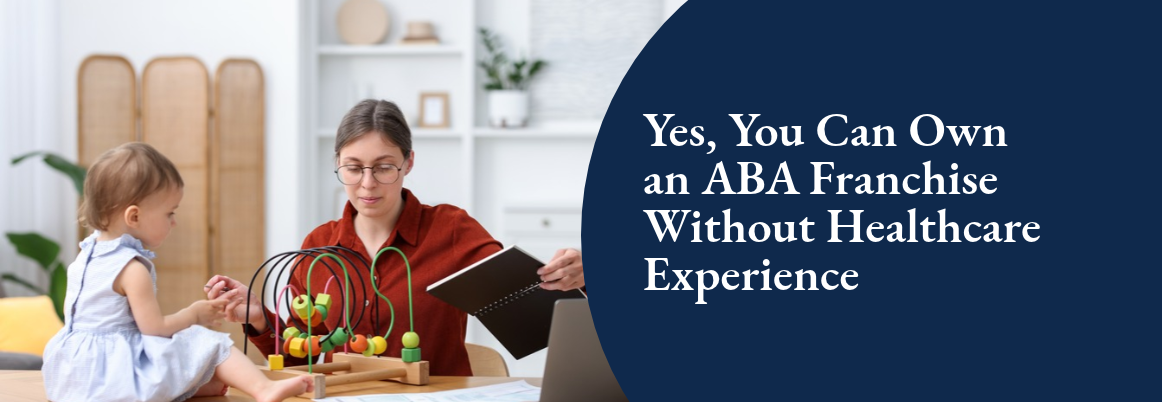
You do not need an ABA background, healthcare degree, or ABA license to become an SOS franchise owner. What you do need is the ability to run a business, lead a team, and genuinely care about making a difference for children with autism and their families.
That combination of business ownership and purpose is at the heart of the SOS model.
Running an ABA center involves much more than providing therapy. There is a business to build, a team to lead, families to connect with, and a community to serve.
That is where the franchise owner comes in.
SOS Franchising provides the training and support needed to help owners learn how to operate an ABA center. You do not have to walk in knowing how ABA therapy works or how to navigate every part of the healthcare system.
Instead, you bring the skills you already have.
If you have managed a team, run a business, worked with customers, handled budgets, built relationships, or led projects, you already have experience that can translate into franchise ownership.
And while you do not need to be a clinician, clinical expertise remains an important part of the center. Qualified professionals handle clinical care, while the owner focuses on leading the business and creating an environment where the team can do its work effectively.
This is perhaps the single most important understanding to have before ever contemplating an ABA franchise.
You are not buying some business that you can leave on a wine-dripping autopilot.
The model of SOS is active ownership. Its CEOs spend about 30 hours a week at the center, facilitating the business and its people.
As an owner, you handle the business aspect of the center. It can mean monitoring the budget, making operational choices, prioritizing who’s in charge of what, and ensuring the center has the supplies to run.
You do not need to know everything initially. Now you need to be open to learning!
As far as a great center begins with a great team.
Owners can aid in recruitment, interviewing, hiring, performance management, and a company culture where the employee knows what he/she is supposed to deliver.
Your data doesn’t go stale just because you spent years managing people in another industry and your business is now an ABA center.
An ABA center is a local business providing services for local families.
That means owners will have to raise awareness, show up in the community, build relationships, and help families understand what services may be available for them.
If you like meeting people and getting to know them, this can be one of the most fulfilling parts of ownership.
Starting something unfamiliar can feel intimidating. You may understand business, but you may still wonder, “How am I supposed to know how to open and operate an ABA center?”
That is exactly where the franchise model comes in.
SOS does not expect you to figure everything out on your own. Its support is designed to take owners through the different stages of building their center.
That can include help with:
Training gives you a place to start, while ongoing support gives you somewhere to turn as you continue operating the business.
For a first-time healthcare entrepreneur, that structure can make a completely new industry feel much more approachable.
There is also a bigger reason many entrepreneurs are looking at the autism services space.
According to the CDC’s latest ADDM Network data, approximately 1 in 31 8-year-old children across the 16 communities included in its surveillance were identified with ASD based on 2022 data.
That number is not a national prevalence estimate, and it should not be treated as a prediction of business performance. But it does point to an important reality: many families need access to autism services.
For SOS, that need is part of what makes the business opportunity meaningful.
The goal is not simply to build another business. It is to build a business that provides an important service to children and families in the community.
That is the purpose behind the profit.
Owning a franchise is about being a good business owner, not having an incredible professional title.
Perhaps you are someone who works in the corporate world but is looking to build something on your own. Perhaps you already make room in your own business and wish to migrate towards a more purpose-oriented sector. Or you might be an autistic parent wanting to turn your lived experience into a business serving other families.
Autistic parents comprise a significant portion of SOS’s franchisees, many of whom were not formally trained in ABA or health care before becoming owners, according to SOS.
What unites them is not so much education. It is their ability to learn, lead, and take ownership.
You should be able to make decisions, manage people, stay organized, understand the financials, and be in a position to solve problems.
You will get to create a whole team, not just manage a spreadsheet. You have to be clear, set expectations, and put people in a position to win.
Challenge of running an ABA center. It ultimately is the passion for wanting to help children with autism and their families that saves you in the business—you have a reason to go on and continue in this community.
Not needing a healthcare degree does not mean there are no requirements.
You still need to qualify financially. SOS currently lists a $45,000 franchise fee and a 5% royalty on gross sales, subject to its stated cap, along with other costs associated with starting and operating the center.
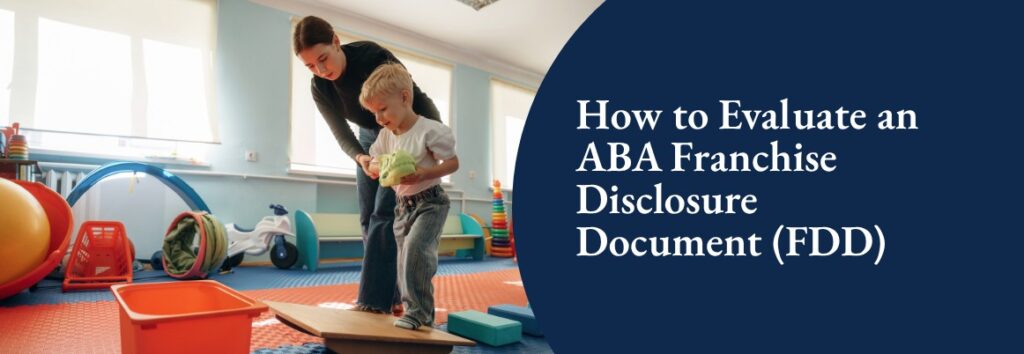
You should always review the current Franchise Disclosure Document and discuss the complete investment with SOS before making a decision, since costs and requirements can vary.
You also need to be ready to be involved.
If you are looking for a business that requires little of your time or attention, an SOS franchise may not be what you are looking for. The model expects owners to participate in operations, manage their teams, build the local business, and learn the systems behind the franchise.
“I need to be a BCBA.”
You don’t. SOS does not require franchise owners to have ABA experience or an ABA license.
“I need a healthcare degree.”
You don’t need a healthcare degree to become an SOS franchise owner.
“I can just invest the money and let someone else run everything.”
SOS is designed around active ownership. You are expected to be involved in the business.
“I need to know everything about ABA before I start.”
You need to be willing to learn, but you do not have to arrive as an ABA expert. SOS provides training and support to help you learn the business.
The better question may not be, “Do I have a healthcare background?”
Ask yourself:
If the answer is yes, your lack of healthcare experience does not automatically stand in your way.
SOS Franchising gives entrepreneurs a way to enter the ABA space without requiring them to become clinicians themselves. You bring the leadership and business mindset. The franchise provides the systems, training, and support. Qualified professionals handle clinical care.
Together, those pieces create the foundation for an owner-operated ABA center.
You do not have to have spent your career in healthcare to consider becoming an ABA franchise owner.
If you have the drive to build a business, the willingness to learn, and a genuine interest in helping children with autism, SOS Franchising may be an opportunity worth exploring.
Before making a decision, take the time to understand the investment, review the current franchise disclosure documents, evaluate your market, and learn what day-to-day ownership really looks like.
Then, when you are ready, connect with the SOS Franchising team and see where the opportunity could take you.
How Long Does It Take to Open an ABA Therapy Franchise?
The timeline will be determined by the time it takes to identify a location, build out, license, hire, and prep the center for opening. Thus, SOS can give you more granular details that are specific to your market.
What Should I Look for When Choosing a Location for an ABA Therapy Center?
Closely observe factors such as families and demographics in the area, clinic providers already available, competitors in the environment, staff availability, and access to more autism services. A good location must work well for the families you will serve in addition to working for your business.
What Are the Biggest Challenges for First-Time ABA Franchise Owners?
Learning a new industry, finding and retaining the right people, managing daily operations, and establishing the center in the local community can all take time and effort.
How Do ABA Franchise Owners Build Relationships With Families and Local Referral Sources?
Networking, staging events, outreach, and building contacts in neighbourhoods provide opportunities for owners to engage with their communities. The objective is to be able to become a familiar and trusted resource for families and partners within the community.
What Should I Review in an ABA Franchise Disclosure Document Before Investing?
Look for key elements such as the initial investment, continuing fees, territory, renewal terms, due diligence information if provided, and other disclosures. Having qualified legal and financial experts vet the document before you invest is a prudent course of action as well.
The SOS Franchise Editorial Team shares insights and guidance for aspiring and current ABA clinic owners on franchising, operations, and growth with SOS Franchising.