


Summary: ABA therapy clinics can be considered a recession-resistant business opportunity because it is a healthcare service tied to ongoing developmental needs rather than discretionary spending. For many children with autism, ABA therapy is medically necessary care that may be funded through private insurance, Medicaid, or state-funded health insurance plans. This ensures a stable demand even during economic downturns, distinguishing ABA therapy from trend-driven or discretionary businesses.
According to CDC estimates, about 1 in 31 eight-year-old children has been identified with autism spectrum disorder in the United States. As more families search for autism therapy services, many communities continue to face limited provider capacity and long waitlists, leaving families struggling to find timely access to care. This creates a real access gap and highlights the ongoing demand for ABA therapy.
In uncertain economic times, many entrepreneurs begin searching for industries that offer stability, long-term demand, and meaningful impact. While retail and discretionary spending businesses often struggle during economic downturns, healthcare services tend to remain essential. One sector that continues to attract investors and franchise buyers is the autism therapy industry — particularly ABA therapy franchises.
For mission-driven entrepreneurs, SOS Franchising offers a structured path into ABA clinic ownership. The SOS franchise model supports hands-on owners with training, operations, staffing guidance, billing workflows, marketing support, technology tools, and quality standards. The system is designed so that owners can lead clinic operations while licensed professionals handle the clinical therapy, maintaining a clear separation of operational and clinical responsibilities for efficiency and quality.
This is not a passive investment. SOS is built for owner-operators who want to lead a local healthcare business while licensed professionals deliver clinical care. Owners manage the business side, including staff hiring, payroll, scheduling, parent communication, and payer workflows, while BCBAs and RBTs manage therapy delivery, treatment planning, and progress tracking.
The economic state may rapidly change. During a recession, families tend to cut down expenditures on luxury items. The issue of health cannot be overlooked since children need proper healthcare.
In comparison to a trend-based business, ABA therapy is different as the need for treatment depends on medical recommendation, accessibility of the therapy, and development of the child. Those searching for autism therapy services are generally not indulging in a lifestyle expenditure. They need an organized approach that will enable the child to develop skills of communication, learning, socialization, and everyday living.
Although ABA therapy falls under the stable healthcare industry, it is not without risks. The success of a clinic will depend on factors such as the availability of staff, schedule, documentation, readiness of payers, local market, and consistency of operations. Unlike discretionary business ventures, ABA offers reliable demand and makes a good choice for mission-oriented entrepreneurs.
| Area | Discretionary Business | ABA Therapy Business |
|---|---|---|
| Demand driver | Lifestyle, convenience, or preference | Healthcare and developmental need |
| Customer behavior during downturns | Spending may be delayed or reduced | Families may continue seeking care |
| Payment model | Often direct out-of-pocket | May involve insurance, Medicaid, or state-funded plans |
| Risk level | Highly tied to consumer confidence | Still has business risk, but need-based demand |
| Main success factor | Marketing, pricing, and customer demand | Staffing, payer readiness, care quality, and operations |
Families Still Need Care During Economic Uncertainty
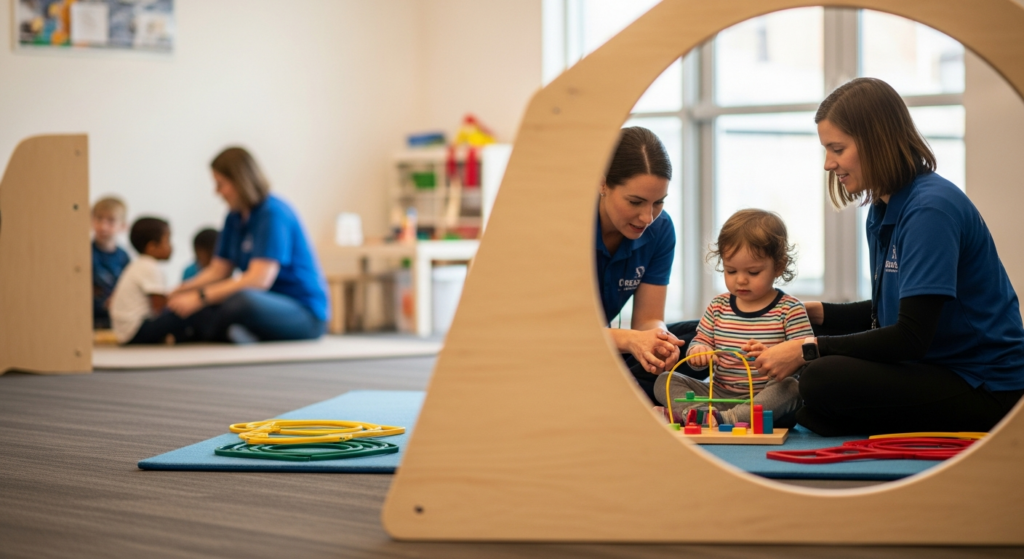
Autism therapy is a healthcare service. It is not a daycare, school, tutoring center, or babysitting service. In an ABA clinic, each child’s program is based on their individual needs. This is important for comprehending how the ABA method retains its appeal even amid economic uncertainty.
Unlike luxury or discretionary services, autism therapy is considered medically necessary care for many children. Parents are not likely to pause medically recommended treatment during economic uncertainty.
Insurance Coverage Creates a Different Business Dynamic
Because services are often funded through health insurance reimbursement rather than direct consumer spending, ABA clinics may be less vulnerable to changing consumer behavior during recessions. This can make the ABA therapy business model less dependent on direct out-of-pocket payments than many consumer-service businesses.
Historically, healthcare-related businesses tend to remain more stable than many consumer industries during recessions. While restaurants, retail stores, and entertainment businesses may fluctuate with consumer confidence, healthcare needs continue regardless of economic cycles.
The Real Need Is Access Not Market Hype
The autism therapy field continues to face a demand and access challenge. More families are seeking services, while many communities still have limited provider availability. Waitlists can stretch for months in some areas, especially where there are not enough qualified clinicians or center-based programs.
This supply-demand imbalance contributes to ABA therapy’s resilience. Economic shifts do not eliminate the need for autism services. Families still require care, children still need support, and communities still need qualified providers.
Demand alone does not guarantee success. Clinics must hire and retain staff, maintain care quality, manage scheduling, meet documentation standards, build trust with families, and follow payer requirements. SOS provides structured operating systems, training resources, staffing guidance, marketing infrastructure, technology tools, and quality standards, allowing owners to focus on execution rather than creating processes from scratch.
There is a meaningful difference between owner-operated ABA clinics and large, investment-led models. SOS emphasizes local ownership, parent transparency, clinical standards, and community accountability. Franchise owners are expected to be present, engaged, and involved. They are not passive investors or distant backers.
The owner leads operations, people, culture, and community relationships, while licensed clinical teams oversee therapy, treatment planning, supervision, and progress review. This separation ensures operational leadership and clinical quality remain distinct.
| Area | SOS Owner-Operator | Clinical Team |
|---|---|---|
| Main responsibility | Runs the business side of the clinic | Delivers and supervises care |
| Care planning | Does not create treatment plans unless qualified | BCBA assesses the child and creates plan |
| Daily focus | Hiring, payroll, scheduling, parent communication, operations | Therapy, supervision, progress review, data collection |
| Family relationship | Supports communication and clinic experience | Guides care updates and progress |
| Accountability | Business performance and local execution | Clinical quality and treatment oversight |
Local owner-operators ensure trust, consistency, accountability, and strong day-to-day leadership.
Many entrepreneurs today are searching for businesses that create meaningful impact — not just income. For many franchisees, the emotional reward of changing lives becomes just as important as financial success.
ABA clinic ownership appeals to corporate professionals, healthcare-adjacent leaders, educators, autism parents, veterans, and existing business owners. Ideal candidates bring people management, operations, finance, hiring, process improvement, and leadership experience.
SOS’s ideal franchisee is financially prepared, mission-driven, and comfortable managing people while following structured systems. Ownership is not passive. Successful owners build local healthcare businesses that expand access to autism therapy while creating meaningful impact.
Starting an ABA clinic independently requires knowledge of site selection, clinic layout, staffing, onboarding, billing workflows, compliance, documentation, technology, local marketing, and parent communication. SOS provides a structured franchise system offering:
Support reduces trial-and-error but does not remove owner responsibility.
Owners function as CEOs of their clinics, managing:
Clinical therapy is delivered by licensed professionals. Active ownership supports staff culture, family trust, operational consistency, and long-term clinic stability.
ABA therapy offers consistent demand, even during economic fluctuations. SOS is designed for hands-on entrepreneurs ready to operate a real healthcare business while helping expand autism therapy access. Ownership is not easy, automatic, or passive but offers meaningful business and community impact.

Nichole Daher is an American entrepreneur, book author, autism advocate, and founder of Success On The Spectrum (SOS)-the first autism treatment franchise in the United States-known for its parent viewing rooms and quality-driven ABA services. She currently serves as CEO of SOS Franchising, where she provides support, resources, and opportunities for entrepreneurs to open their own Success On The Spectrum autism centers.