


Client Overview
Amelia and Justin Long didn’t come into this space as operators. They came in as parents.
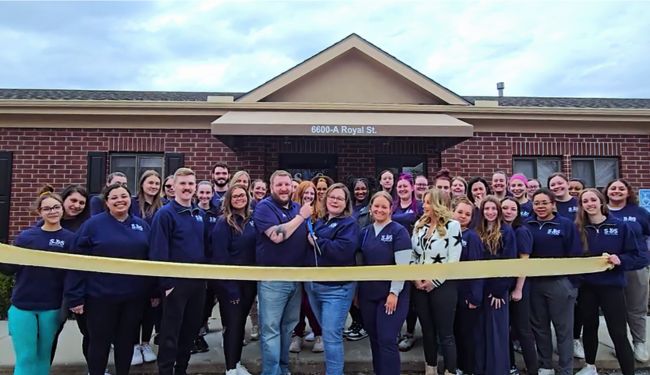
Based in Lee’s Summit, Missouri, they opened their first center on March 28, 2022, with an initial investment of $350,000. Over the next few years, that single decision turned into something much bigger, not just in terms of revenue, but in how the clinic actually ran day to day.
The Starting Point
A Personal Need That Didn’t Have an Easy Answer
This didn’t start with a plan to build a business.
Their son was diagnosed with autism at a young age, and like most parents in that situation, they started looking for the right kind of support. ABA therapy kept coming up as a recommendation. It made sense. It was structured. It was proven.
But finding consistent services nearby was harder than expected.
At some point, the question shifted from “Where do we go?” to “What do we do about this?”
That shift is what led them here.
The Challenge
The Problem Wasn’t Demand
The need for services was already there. That part was clear from the beginning.
What wasn’t clear was how to build something that could actually hold up over time.
Running an ABA clinic is not just about opening the doors. It depends on how well everything works behind the scenes, from staffing to scheduling to billing. And in the early stages, those pieces don’t naturally fall into place.
Where Things Get Difficult Early On
They had to figure out how to:
- Build a reliable team and keep it stable
- Set up schedules that didn’t fall apart week to week
- Understand how billing and reimbursements actually work
- Keep therapy delivery consistent as more families came in
These are the parts that don’t show up in brochures, but they decide whether a center stabilizes or struggles.
Approach
Slowing Down to Build It Properly
Instead of chasing early growth, they focused on getting the basics right.
Daily operations were structured in a way that reduced guesswork. Scheduling, staffing, and communication started to follow a pattern rather than being handled on the fly. That alone made a noticeable difference.
Keeping Care Consistent as They Grew
At the same time, they stayed close to the core of the work. One-on-one ABA sessions, proper clinical oversight, and a clear approach to delivery helped keep things steady even as the number of patients increased.
Growing Only When It Made Sense
They didn’t try to scale ahead of what the system could handle.
Growth happened when the team was ready, when schedules were holding, and when the overall structure could support more volume without things slipping.
Execution Timeline
Results — Revenue Growth
Operational Impact
Less Firefighting, More Structure
In the early days, a lot of decisions were reactive. Over time, that shifted. Scheduling became more predictable, and daily operations required less constant fixing.
Clearer Roles Across the Team
As the team grew, so did clarity. Hiring, onboarding, and responsibilities became more defined, which made day-to-day coordination easier.
Billing Became Less Friction-Heavy
Billing is one of those areas that can slow everything down. As processes improved, errors reduced, and the overall flow became smoother.
Founder Perspective
A Small Moment That Meant Everything
For Amelia and Justin, this has always been more than just operations.
They talk about a moment when their son said “thank you” for the first time after months of therapy. It was simple, but it stayed with them.
It’s easy to focus on numbers when you look at a case like this, but that moment explains the reason behind the work much better.
Watch Their Story
Takeaway
This isn’t a story about fast growth.
It’s a story about what happens when a clinic is built in a way that can actually sustain itself. Demand was always there, but it only turned into consistent growth once operations, staffing, and delivery started working together.
That’s what made the difference.