


Summary: Preschool and ABA franchises look similar from the outside, but they run on very different engines. Preschools live on tuition and enrollment. If seats aren’t filled, revenue drops. Competition, pricing, and local demographics matter a lot. It can be a solid business, but it is sensitive to market shifts.
ABA therapy is healthcare. Demand comes from clinical need and insurance coverage, not discretionary spending. In many markets, families are actively looking for services. Revenue per child is usually higher, but operations are more structured and hands-on.
Preschools fit owners who enjoy education environments and tuition-based models. ABA therapy franchises like Success On The Spectrum fit hands-on operators who want a healthcare business with long-term demand and real community impact, without needing to be clinicians.
If you’re looking at franchises that serve kids, preschool is usually the first stop. It’s familiar. You can picture the business. You’ve probably seen a few brands in your area.
ABA therapy is different. It’s healthcare, regulated and mission-heavy. And in many markets, the demand pressure is real.
So when people ask us, “Which is more profitable: a preschool franchise or an ABA therapy franchise?” We don’t start with profit margins.
We start with what actually drives revenue, what breaks operations, and what stays stable when the market shifts.
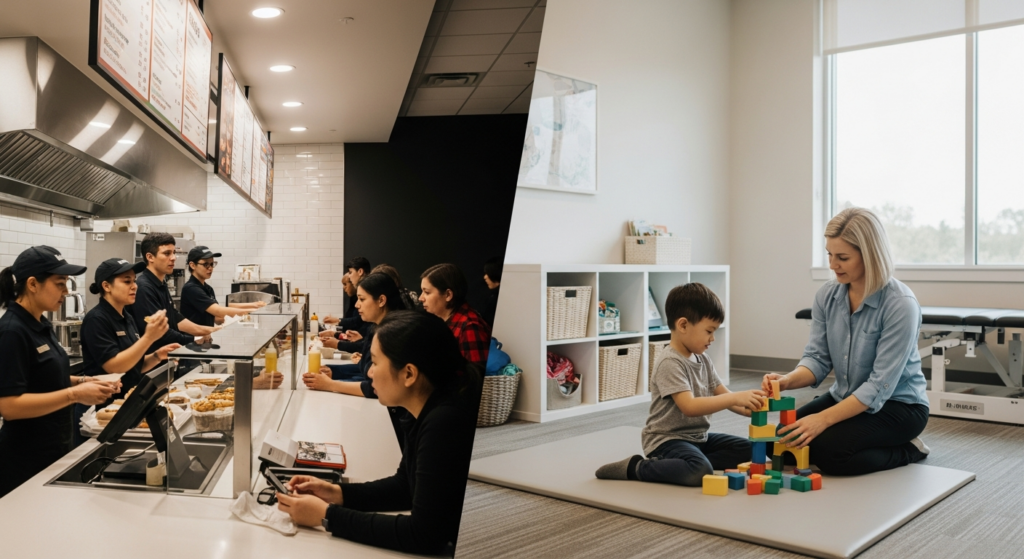
On the surface, these models can look similar:
But they’re powered by totally different demand engines.
Preschool demand is largely shaped by working-parent needs, competition, pricing, and local demographics. (Strong category, but locally sensitive.)
ABA therapy demand is driven by clinical need and the growing prevalence of autism. CDC’s ADDM Network estimates autism prevalence at about 1 in 31 children.
That one difference changes everything: lead flow, seasonality, pricing pressure, and how resilient the business can be over time.
How a Preschool Franchise Works
A preschool franchise typically gives the owner:
Your day-to-day usually revolves around:
You’re building a local education business that wins on trust, convenience, and experience.
Market Snapshot and Trends
Early childhood education is a massive global category, and “preschoolers” represent a large chunk of the overall market in many reports. One estimate puts the preschoolers segment at ~48% of the global early childhood education market (2024).
Big market, yes but also crowded in most metros.
Revenue Streams and Profit Drivers
Most preschool centers make money through:
Your strongest lever is usually occupancy. If you’re not full, you feel it quickly.
What’s attractive
What gets hard
Preschool can absolutely be a strong business but it’s usually a high-competition, occupancy-driven game.
How an ABA Franchise Works
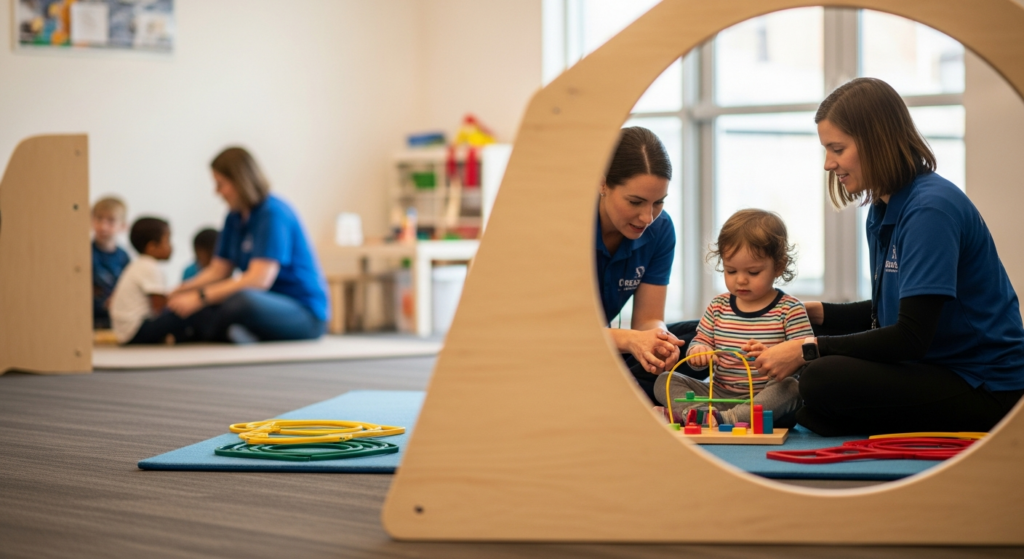
ABA therapy is an evidence-based, data-driven clinical service for children with autism. It’s typically delivered one-to-one, supervised by credentialed clinicians, and focused on skill development and reducing behaviors that interfere with learning and daily life.
At Success On The Spectrum, we built our franchise system so that hands-on entrepreneurs can run a high-quality ABA clinic without being clinicians.
Here’s the clean separation:
Market Demand and Growth
The demand driver is not a trend. It’s needed.
CDC’s latest autism monitoring estimates autism prevalence at about 1 in 31, 8-year-old children.
When prevalence rises and awareness improves, families look for services and many communities still face access gaps.
Revenue and Operational Dynamics
ABA clinics typically operate on a healthcare reimbursement model. That means the revenue logic is different from tuition:
This model does come with operational complexity:
That’s why our franchise system is built around training, operational manuals, staffing guidance, billing workflow education, and ongoing quality oversight while still keeping ownership firmly hands-on and accountable.
Revenue Sources: Tuition vs Insurance Funding
Preschool
ABA
Neither model is “easy.” But they behave differently under stress.
Profit Potential and Growth Opportunities
Preschool scaling usually looks like:
ABA scaling often looks like:
In simple terms:
Preschool costs commonly include:
ABA costs commonly include:
Both have overhead. ABA adds healthcare complexity but it can also bring stronger demand stability in many markets.
Preschool can be sensitive to:
ABA tends to be driven by:
That doesn’t mean “guaranteed.” It means the demand engine is different and often more durable.
Preschool Franchise Operations
If you love education environments, preschool ownership can be rewarding. You’ll spend a lot of time on:
ABA Therapy Franchise Operations
ABA clinic ownership is healthcare operations. It requires discipline around:
At SOS, we are very clear: this is not passive.
Our model is built for hands-on owners who want to lead teams, build culture, and run a healthcare business responsibly.
Preschool Market Trends
Early childhood education remains a large market, and several industry reports project continued growth. But again: it’s local, competitive, and price-sensitive.
ABA Therapy Market Trends
Autism prevalence monitoring continues to show high and rising identification rates, and that drives ongoing demand for therapy services. At the same time, communities need more high-quality providers; not “growth at any cost,” but ethical, clinically supported expansion.
Preschool Franchise Impact
Preschools help children build early learning foundations, social comfort, and routines that support school readiness.
ABA Therapy Franchise Impact
ABA therapy can change the trajectory for a child and their family: communication, learning, independence, and daily life skills. It’s also deeply personal work and families remember the centers that treat them with transparency and respect.
At SOS, transparency is not a marketing language. It’s an operational philosophy.
Preschool Franchise Candidates
You may fit preschool if you:
ABA Therapy Franchise Candidates
You may fit ABA (especially SOS) if you:
If you’re choosing between a preschool franchise and an ABA therapy franchise, the honest answer is:
Preschool can be a strong business when you win occupancy and differentiate locally but it often lives and dies by enrollment pressure and competition.
ABA therapy is healthcare. It’s operationally demanding but it’s also driven by sustained need, and in many markets, families are actively seeking access.
At Success On The Spectrum, we’ve built a structured franchise system to help hands-on entrepreneurs run ethical, high-quality ABA clinics with real operational support while keeping the ownership model transparent and accountable.
If you want to explore what that looks like in practice, we’re happy to walk you through the operating model and what responsible clinic ownership actually involves.
What’s the main difference between preschool and ABA therapy franchises?
Preschool franchises deliver early education. ABA therapy clinics deliver healthcare services for children with autism under clinical supervision.
Do I need clinical experience to open an SOS ABA franchise?
No. Owners are business operators. Clinical services are delivered by licensed professionals. We provide training and operating systems so hands-on owners can run the business responsibly.
Which model generally has higher per-client revenue?
ABA therapy can generate higher revenue per client than most tuition models because it is typically insurance-reimbursed. Actual results vary by market, payer mix, authorization, and staffing capacity.
Is the ABA therapy market growing?
CDC monitoring estimates autism prevalence at about 1 in 31 children, which contributes to sustained demand for services.
What support does SOS provide to franchisees?
We provide training, operations manuals, staffing guidance, billing workflow education, marketing infrastructure, and ongoing quality assurance to support ethical, compliant operations.

Nichole Daher is an American entrepreneur, book author, autism advocate, and founder of Success On The Spectrum (SOS)-the first autism treatment franchise in the United States-known for its parent viewing rooms and quality-driven ABA services. She currently serves as CEO of SOS Franchising, where she provides support, resources, and opportunities for entrepreneurs to open their own Success On The Spectrum autism centers.